


Two big announcements this week as well as catching up on a great platform I covered last year.
Anthropic launched Claude in Chrome - a research preview of their approach to ‘zero-click’ browsing. Google DeepMind also launched some fantastic new image editing features in Gemini that move the game on. Lastly, there’s great coverage from The Verge on Showrunner - a platform that allows users to generate their own TV episodes.
Lots of ethics news this week too with research from Stanford around the impact AI is having on early careers, OpenAI pledging to add parental controls following a teen’s death, and Anthropic settling their lawsuit with authors.
There’s also a great Long Read from Ethan Mollick on Mass Intelligence - check it out.
Anthropic launches a Claude AI agent that lives in Chrome
Claude for Chrome has just been released in research preview, but is another example of a browser-based agent like OpenAI’s ChatGPT Agent and Perplexity’s Comet browser. It’s another step towards ‘zero-click’ browsing, one of the three ‘zero-click’ pillars of Web 4.0 (alongside ‘zero-click’ search and ‘zero-click’ purchasing).
Web browsers have long been our gateway to the internet, ever since the Mosaic browser launched all the way back in 1993. 15 years later, in 2008, both Apple and Google offered consumers a new gateway to the internet with the launch of their mobile app stores. Now, in 2025, time spent online is split approximately 80:20 between apps and browsers respectively and we’re just starting to see the third wave of disruption with new AI platforms that will do the browsing on our behalf.
We’re seeing this first with web browsers, but as both iOS and Android ship more agentic AI features on their devices next year we’ll see a similar disruption in app usage. Agentic platforms like Claude for Chrome, ChatGPT Agent, and Perplexity’s Comet browser are showing us what the future of accessing digital services will look like. Just like mobile apps disrupted web browsing 15 years ago, I expect we’re about to see a similar disruption with AI platforms as they gain adoption.
To be clear, this won’t be a disruption to all digital services - entertainment and social media make up about 65% of time spent online, and I don’t expect AI platforms to replace this. But the remaining 35% will be severely disrupted and It’s entirely possible that by 2030 time spent online is split 70:25:5 between apps, AI platforms, and browsers respectively.
Image editing in Gemini just got a major upgrade
Just last year, if you were using generative AI to create images, to get the image you wanted took lots of iteration, trial and error, and in all honesty a bit of luck. The issues were quite broad - it was hard to articulate exactly what you had in mind in a prompt, and image generating models weren’t the best at reasoning through and following your instructions.
With the release of ChatGPT’s new image capabilities earlier in the year we got a model that was much better at following instructions for the initial generation, but Gemini’s image editing capabilities take this big step further. Gemini’s editing features allow you to iterate over an image in much more precise ways, closely following your instructions and allowing you to refine your image with natural language.
I’m sure we’ll all be taking this for granted soon, and by next year the early frustrations with image generation will be a distant memory. It’s amazing how far things have come in just a matter of months!
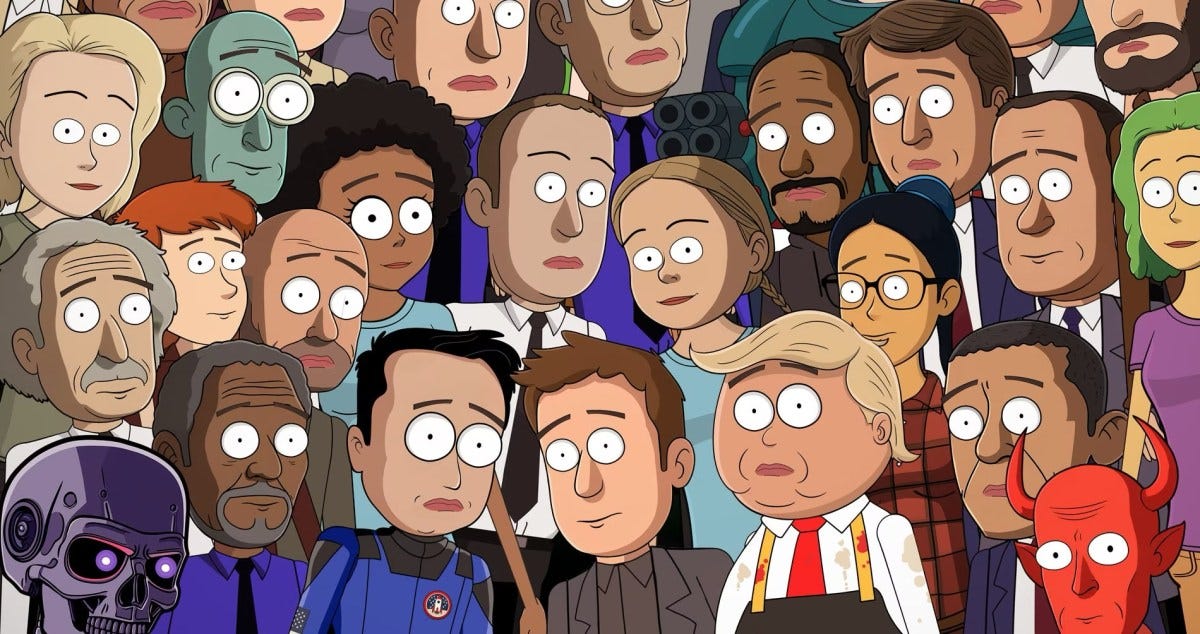
Showrunner wants to turn you into a happy little content prompter for the ‘Netflix of AI’
I first wrote about Showrunner back in June 2024, but they were on my radar before that when they generated some unlicensed South Park episodes.
Showrunner is a super interesting platform that essentially allows people to generate their own TV episodes. There’s a great article about it over at The Verge and it sounds like they’ve come a long way since last summer with a new influx of funding from Amazon and interested from Disney in using the platform to make their IP interactive.
The future of this technology probably isn’t so much about generating entirely new TV episodes but in making content much more interactive. Think fan-fiction on steroids where spin-offs are generated, new ideas explored and shared, and a seamless feedback loop between creators and their fans.
Sounds like a lot of fun!
Web 4.0
ChatGPT is sending less traffic to websites – down 52% in a month
Google and Grok are catching up to ChatGPT, says a16z’s latest AI report
AI Ethics News
AI Is Crushing the Early Career Job Market, Stanford Study Finds
Half of UK adults worry that AI will take or alter their job, poll finds
Teen killed himself after ‘months of encouragement from ChatGPT’, lawsuit claims
OpenAI will add parental controls for ChatGPT following teen’s death
OpenAI co-founder calls for AI labs to safety-test rival models
Meta updates chatbot rules to avoid inappropriate topics with teen users
Anthropic will start training its AI models on chat transcripts
How one AI startup is helping rice farmers battle climate change
AI sycophancy isn’t just a quirk, experts consider it a ‘dark pattern’ to turn users into profit
Can AIs suffer? Big tech and users grapple with one of most unsettling questions of our times
911 centers are so understaffed, they’re turning to AI to answer calls
Long Reads
One Useful Thing - Mass Intelligence
“The future is already here, it’s just not evenly distributed.“
William Gibson