


Big week this week with the release of Claude Opus 4.7, which has been slept on by the mainstream media, the release of a genuinely creative AI model from a small Australian startup, Springboards and signs that Design might be the next area to be widely disrupted by AI. There was also a great TED talk from Peter Steinberger who shares his OpenClaw story.
Enjoy!
Anthropic Releases Claude Opus 4.7 to Remind Everyone How Great Mythos Is
On Thursday Anthropic released the latest version of their most capable Opus model, bumping it up to version 4.7. For some reason this wasn’t that widely reported on, but I think this is a bigger deal than most people think.
Firstly, Anthropic don’t release their Opus models very often. For example, the Opus models jumped directly from v3 to v4 whilst Sonnet (their mid-tier model) had v3.5 and v3.7 between major model releases.
Secondly, Opus has never before been on a higher version number than Sonnet. Ever. Anthropic have always been very deliberate and careful with their release strategy to roll out Sonnet first, and then if everything goes well from a safety perspective to then release the Opus model.
Thirdly, and probably most importantly, Opus 4.7 is a huge leap in performance that we don’t usually see with point releases, especially in just 2 months (Opus 4.6 was released in February). As you can see below, on agentic coding tasks, Opus 4.7 is a clear 10-15 percentage points more capable which is huge!
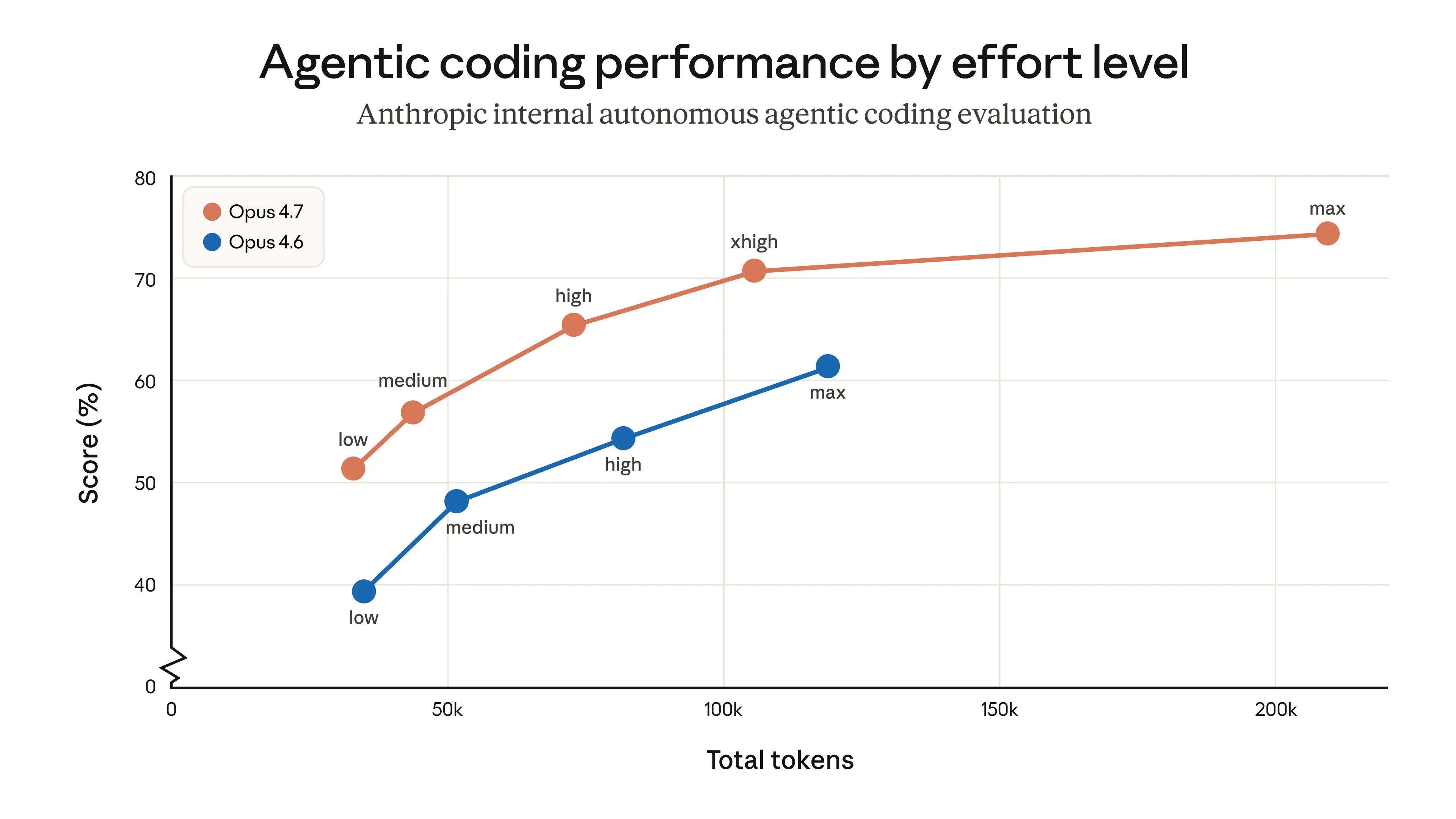
For me, all of this points towards Opus 4.7 being more like a preview of Opus 5, rather than just a point release improvement over Opus 4.6. This is a distilled version of Anthropic’s new Mythos model dressed up as Opus. Anthropic hint at this in their release, but don’t go as far as fully confirming it:
We stated that we would keep Claude Mythos Preview’s release limited and test new cyber safeguards on less capable models first. Opus 4.7 is the first such model: its cyber capabilities are not as advanced as those of Mythos Preview (indeed, during its training we experimented with efforts to differentially reduce these capabilities).
I’ve been putting Opus 4.7 through its paces with various coding and other general tasks over the weekend, and I have to say I’m very impressed. It’s not just coding tasks it’s materially better at, it’s also more thoughtful, considered, reliable, and thorough in all the tasks I’ve thrown at it.
I’m sure we’ll be seeing a lot more coverage and commentary of Opus 4.7 next week because it’s just too good to ignore.
Flint by Springboards
I’ve been following Springboards for a couple of years now - they’re a great Australian start-up that are focused on marketing and creative work and building AI tools that enhance creativity instead of replacing it.
This week they released their first AI model, Flint, which has been trained specifically for inspiration and creativity. It’s designed to tackle a problem with our current AI models that not many people are aware of - they ‘collapse’ to the average, are brilliantly mediocre, and cater for the masses. This is all like poison for a creative process and Springboards want to address this head on with Flint.
The demo above is really worth a watch - it clearly shows how leading models from Anthropic and OpenAI keep giving repeating and predictable answers whereas Flint injects much more variation and creativity. Flint is in alpha preview now, and focused on classic marketing use cases, but I think has a lot of potential for broader creative tasks and workflows in the future. Flint will be great for anything that requires a spark of creativity. One to keep an eye on!
Anthropic Launches Claude Design
Releasing their most capable model just wasn’t enough for Anthropic this week, so they decided to release a whole new capability in Claude Design. This is essentially a frontend UI design tool, but can be applied to lots of other things too like graphics and presentation slides.
This has the potential to be very disruptive and Mike Krieger, Anthropic’s CPO, even had to leave Figma’s board of directors as part of releasing this new capability. Following the release, Figma’s stock price also fell by 7%.
It’s an interesting time in the design space right now with Claude Design, and the launch of Google’s Stitch a few weeks ago. I think this is the next area to see major disruption after the huge amount of disruption we’ve been seeing in the coding space over the last 6 months. Because AI models are now so good at code, and frontend design (and other types of design) can be driven by code, they’re now very quickly becoming really good at design too.
As I’ve said before, software ate the world and now AI is eating software, taking the world with it.
Anthropic | TechCrunch | Gizmodo
How I created OpenClaw
OpenClaw has had a lot of hype this year, and deservedly so - it’s been the fastest growing open source project of all time and got a huge amount of love not just from the developer community but lots of press coverage too.
So it’s great to see the personal story behind the code in this TED talk from Peter Steinberger, who has recently joined OpenAI. He’s been on a wild journey over the last 6 months and regardless of what you think of OpenClaw it has been incredibly disruptive and has a huge impact on they types of tools AI companies are developing, and how they’re developing them.
Web 4.0
AI traffic to US retailers rose 393% in Q1, and it’s boosting their revenue too
Google adds Nano Banana-powered image generation to Gemini’s Personal Intelligence
AI Ethics News
ChatGPT’s latest stylistic quirk is sinister, infuriating – and absolutely everywhere
Anthropic co-founder confirms the company briefed the Trump administration on Mythos
Read OpenAI’s latest internal memo about beating the competition — including Anthropic
Zelenskyy Says Drones Are the Future of War After Claiming Robot Unit Captured Russian Troops
Long Reads
Stratechery - Mythos, Muse, and the Opportunity Cost of Compute
“The future is already here, it’s just not evenly distributed.“
William Gibson