



This week in AI news, OpenAI pushed Codex further beyond software development and into broader knowledge work, claiming that around 20% of users are already using it this way. Anthropic also published an update on its progress towards AI systems that can help build better versions of themselves, alongside a warning that frontier AI development may need coordinated slowdowns if things keep accelerating. And Bernie Sanders proposed the American AI Sovereign Wealth Fund Act, which would give US citizens a stake in major AI companies. It is an interesting idea, but also an awkwardly national answer to a global problem, given that the data AI models have been trained on comes from the world, not just America.
In Web 4.0 news there’s a great report from Harvard Business Review on How People Are Really Using AI in 2026 and in Ethics News UK media groups were given the power to opt out of Google AI search summaries, which is a big deal.
I’d also be really grateful if you could take 2 minutes to complete a quick reader poll about The Blueprint.
Enjoy!
OpenAI launches new Codex tools for white-collar work
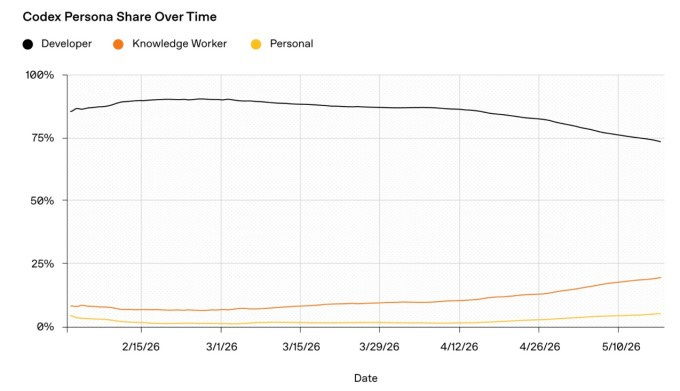
OpenAI is starting to reposition Codex from a coding agent into a broader agent for knowledge work. The company says Codex now has more than 5 million weekly active users, and that knowledge workers now make up around 20% of its user base.
This feels significant because the coding-agent pattern is clearly starting to escape software engineering. First developers got agents that could plan, execute and ship work across files, tools and workflows; now the same pattern is being applied to reports, spreadsheets, presentations, contracts, research and data analysis.
Coding is becoming the test case for the future of work. If agents can handle software development, which is complex, messy and full of edge cases, it is not hard to see how the same model moves into strategy, finance, marketing and operations next.

Anthropic (Sorta) Calls for Pause on AI Development. You Should (Sorta) Take It Seriously
Anthropic has published an interesting new paper on how AI systems could eventually become capable of building better versions of themselves. We’re not there yet, but it argues that AI is already accelerating the development of AI.
Some of the numbers are pretty striking. Anthropic says more than 80% of the code merged into its own codebase is now authored by Claude, and that its typical engineer was merging 8x as much code per day in Q2 2026 as they were in 2024.
This is why Anthropic is now making the case for coordinated slowdowns if frontier AI development starts moving too quickly. Not a unilateral pause, which would simply hand advantage to less cautious players, but a verified, collective slowdown between the major labs and governments.
It feels like the near-term and long-term AI debates are starting to blur. We keep talking about AI replacing knowledge work, but the more significant issue may be AI accelerating AI itself, because once the development curve stops being purely human-paced, governance becomes even harder than it already is.
Introducing the American AI Sovereign Wealth Fund Act
This week, Bernie Sanders put forward one of the more interesting AI policy ideas I’ve seen for a while. If AI has been trained on the collective knowledge, creativity and labour of humanity, then humanity should share in the wealth it creates.
The American AI Sovereign Wealth Fund Act would give the American public a direct ownership stake in major AI companies through a one-time 50% tax paid in stock rather than profits. It is a bold idea, but also an awkwardly national answer to a fundamentally global problem.
Because if AI has been trained on the work, data and culture of people all over the world, why should only American citizens share in the upside? That doesn’t make the underlying principle wrong, but it does expose one of the biggest tensions in AI policy: the technology is global, the companies are mostly American, and the political solutions are still largely national.
Web 4.0
First (publicly known) AI agent-to-AI agent car deal goes down in Salt Lake City
ChatGPT is explicitly searching for Reddit 24x more often in its query fanouts
‘Poisoned’ AI: the ChatGPT shopping scams that lead to fake websites
AI Ethics News
UK media groups given power to opt out of Google AI search summaries
Bernie Sanders Continues to Be Only Democrat(ish) Lawmaker Willing to Govern on AI
Trump signs narrower executive order on AI oversight after industry objections
Florida sues OpenAI, Sam Altman, in first-of-its-kind lawsuit over violent incidents
OpenAI Really Doesn’t Like the Attention Its Co-Founder’s Political Donations Are Getting
Amazon’s search bar will invent AI-generated products you can’t buy
Long Reads
One Useful Thing - Co-Existence and the End of Co-Intelligence
The Guardian - My year with the robots: how Joanna Stern let AI into her home, work – and heart
“The future is already here, it’s just not evenly distributed.“
William Gibson